
The Situation: A High-Volume Dealership Paying ComEd Over $180,000 a Year
Arlington Toyota in Palatine, Illinois operates one of the highest-volume Toyota dealerships in the Chicago metro. The showroom, service department, parts warehouse, and lot lighting together consumed substantial electricity around the clock — ComEd bills regularly exceeded $180,000 annually. Dealership General Manager Gary Vicari first heard about the ESP zero cap-ex model through a business contact who had installed solar at another Illinois commercial facility.
Auto dealerships are among the best commercial solar candidates in Illinois. The combination of large, flat service center rooftops, high daytime electricity consumption from compressed air systems, lighting, and HVAC, and substantial federal tax liability from vehicle inventory creates ideal conditions for the ESP model. The dealership had no roof work needed — the service center structure was sound and solar-ready.
How the ESP Model Worked for a Dealership
Auto dealerships are particularly well-suited for the ESP model because of their combination of high federal tax liability and high electricity consumption. Arlington Toyota's federal tax payments far exceeded the threshold required to efficiently deploy the ITC-based financing structure. Under the ESP, no capital budget was touched — the project was funded entirely through the tax benefits the business would generate from the solar investment.
The Section 48E Investment Tax Credit at 30% of the 641 kW system cost produced a direct federal tax credit applied in the first year the system was placed in service. MACRS 5-year accelerated depreciation on the adjusted basis generated additional tax benefit over the following four years. Together, these federal incentives created the financial basis for zero-upfront-cost ownership — with the dealership making structured monthly ESP payments below the electricity bill it was previously paying ComEd.
Illinois Incentives Applied
Federal ITC (30%, Section 48E): The direct tax credit against the dealership's federal liability formed the ESP financing foundation. As a high-revenue auto dealership with substantial annual federal taxes, the full ITC was utilized in the placement year. See the IRS ITC guidance for documentation standards.
ComEd Smart Inverter Rebate ($250/kW): Palatine is within ComEd's service territory, qualifying the 641 kW system for a $160,250 Smart Inverter Rebate paid by ComEd approximately 60 days after commissioning — a direct cash payment independent of electricity savings or tax benefits.
Illinois Shines SREC Program: Solar One Illinois enrolled the project in the Illinois Shines Adjustable Block Program, adding 15-year SREC income on top of electricity savings. For a 641 kW system producing approximately 780 MWh annually in ComEd territory, this adds meaningful revenue each year of the 15-year contract.
MACRS 5-Year Depreciation: The accelerated depreciation on the ITC-adjusted system basis generated significant additional tax benefit in years one through five, front-loaded through bonus depreciation rules applicable in the project year.
Illinois Property Tax Exemption: The solar installation was excluded from Cook County property tax assessment, ensuring no property tax increase from the improvement.
Design, Interconnection, and Installation
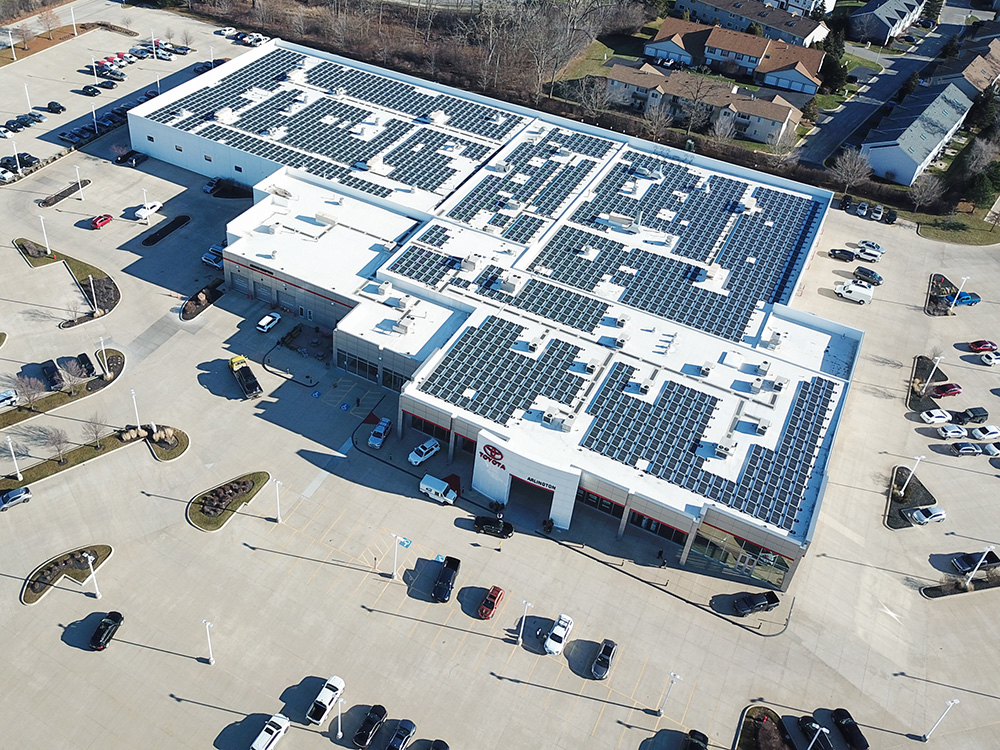
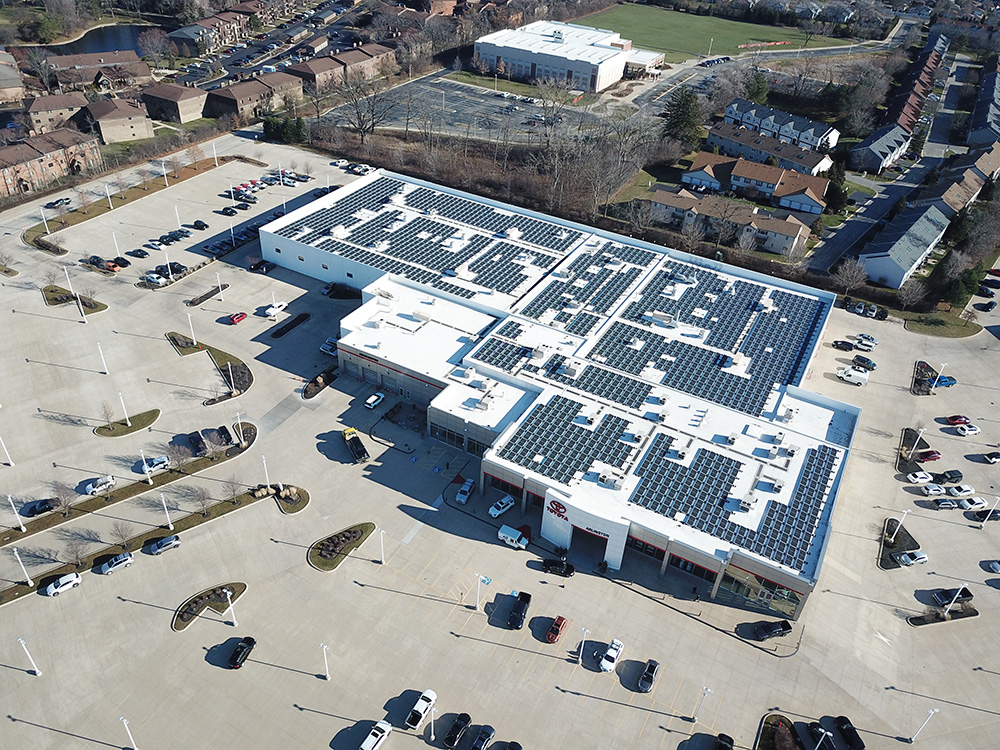
Solar One Illinois designed the 641 kW system using 1,540 panels distributed across the main dealership building and service center rooftops. Both structures had adequate load-bearing capacity confirmed through structural analysis. ComEd interconnection for this 641 kW system — under 1 MW — was completed in 74 days, faster than the typical 90-day window for systems of this size. Physical installation took approximately three weeks with no disruption to service department operations or showroom activity.
The completed array is highly visible from Rand Road, and the dealership has received consistent customer comments about the installation since commissioning. Gary Vicari described it as "a tremendous asset to the business, to our image, and to our electric bill" — capturing both the financial and marketing dimensions of the project.
Project Financial Summary
System Size
641 kW
Federal ITC (30%)
~$193,000 credit
ComEd Smart Inverter Rebate
$160,250 cash
Upfront Capital Required
$0
Annual Electricity Savings
$75,000
Annual ESP Payment
$52,000
Net Year-One Benefit
$23,000
25-Year Projected Savings
$1.9 million+
Client name changed for privacy. Results vary. Prior results do not guarantee similar outcomes. Projections assume 1.5% annual electricity rate escalation.
Commissioned 2021: The System Has Been Running for Three Years
The system commissioned in 2021 and has been running without incident since. The monthly ComEd bill dropped by approximately $6,250 from the first billing cycle. Annual savings of $75,000 against the $52,000 ESP payment produce $23,000 in net annual benefit — money that remains in the business. At the ESP payoff date, the dealership owns the system outright and retains the full savings indefinitely.
For auto dealers evaluating commercial solar in Illinois, this case study demonstrates that the size, timeline, and economics are predictable. ComEd interconnection, Smart Inverter Rebate, Illinois Shines enrollment, and ESP financing all followed standard processes and timelines. See our Illinois commercial solar overview and full incentives guide for current program details, including the December 31, 2027 federal ITC in-service deadline. Our due diligence checklist outlines what to verify before signing any solar contract.