
The Situation: Six-Figure ComEd Bills and a Solar-Ready Roof
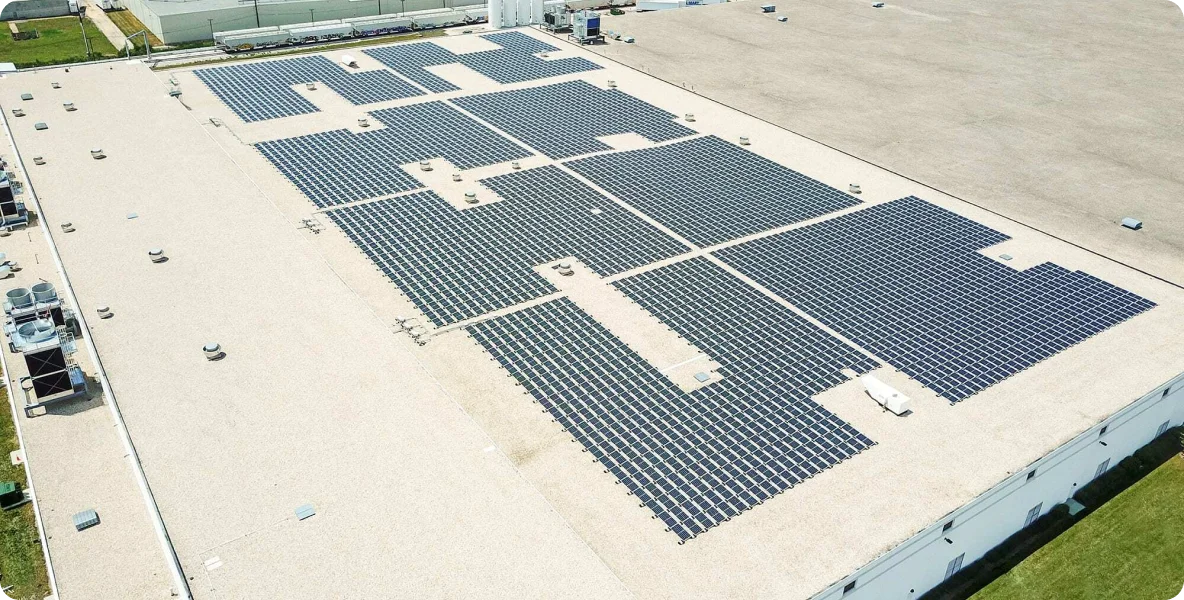
A plastics manufacturer in Batavia, Illinois — a Kane County suburb 40 miles west of Chicago — had been watching its ComEd electricity bills climb steadily for years. By mid-2020 the facility was paying well into six figures annually for the electricity powering three production shifts, compressors, injection molding equipment, HVAC, and facility lighting across 400,000+ square feet of manufacturing space.
Two factors made this facility an unusually strong solar candidate. First, the company had re-roofed the main production building in 2019, giving the structure 20-plus years of remaining service life — removing the single most common obstacle to commercial solar financing. Second, the business generated substantial federal tax liability from manufacturing operations, well above the $400,000 annual threshold that makes the ESP zero cap-ex model most efficient. A financial advisor who had seen the ESP model at another Illinois manufacturer referred the owner to Commercial-Solar.org in early 2020.
The ESP Model: How Zero Upfront Cost Works
The Energy Savings Program (ESP) is the financing structure Commercial-Solar.org uses for qualifying businesses with federal tax liability. Understanding how it worked for this manufacturer makes the project economics clear.
The 1.63 MW system was sized at approximately $2.8 million in installed cost. Rather than requiring the manufacturer to write a check, the ESP structured the project around the federal tax benefits the business would generate from installing solar. The Section 48E Investment Tax Credit — at 30% of eligible project cost — produced an $840,000 direct credit against the manufacturer's federal tax liability in the first year. That credit, combined with MACRS 5-year accelerated depreciation on the adjusted basis, created the financial foundation for zero-upfront-cost ownership.
Under the ESP structure, the manufacturer began making monthly payments below their previous electricity bill from day one — producing positive cash flow immediately. The ITC and depreciation benefit effectively flowed through the financing structure, funding the system without the business touching its capital budget. At the 7-year ESP payoff, the manufacturer owns the 1.63 MW system outright with no remaining balance and retains the full $175,000 in annual electricity savings indefinitely.

The Illinois Incentive Stack: Four Programs Stacked on One Project
Illinois offers more stacking commercial solar incentives than any other Midwest state, and this project captured all of them. Each program was applied independently and additively — they do not reduce each other.
Federal Investment Tax Credit (30%, Section 48E): The $840,000 ITC formed the foundation of the ESP model. As a manufacturing C-corporation with federal tax liability well above this amount, the company applied the full credit in the first tax year the system was placed in service. The ITC is a dollar-for-dollar reduction in federal taxes owed — not a deduction, a direct credit. See the IRS Investment Tax Credit page for documentation requirements.
MACRS 5-Year Accelerated Depreciation: On top of the ITC, the adjusted system basis — $2.8M minus half the ITC ($420,000) = $2.38M — was depreciated on the MACRS 5-year schedule. At a 21% federal corporate rate, this generated approximately $500,000 in additional tax benefit over five years, heavily weighted toward years one and two through bonus depreciation rules.
ComEd Smart Inverter Rebate ($250/kW): The ComEd Smart Inverter Rebate pays $250 per kilowatt for commercial solar systems using qualifying smart inverters in ComEd territory. For this 1,630 kW system, that represented $407,500 in direct cash paid by ComEd approximately 60 days after commissioning — a rebate check, not a tax benefit. Kane County is squarely within ComEd service territory, making this incentive immediately applicable.
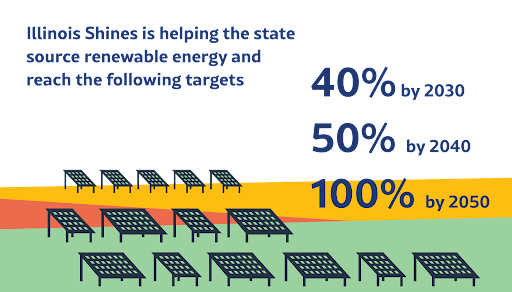
Illinois Shines SREC Program (15-Year Contract): Solar One Illinois enrolled this facility in the Illinois Shines Adjustable Block Program, administered by the Illinois Power Agency. The program pays commercial solar owners for solar renewable energy credits (SRECs) based on actual system production over a 15-year contract. For a 1.63 MW system generating approximately 2,000 MWh annually, Illinois Shines income adds meaningful supplemental revenue over the contract period — fully independent of electricity savings.
Illinois Property Tax Exemption: Under Illinois state law, the assessed value of the solar installation is excluded from local property tax calculations. For a 400,000 sq ft manufacturing facility in Kane County, this means no property tax increase despite a multi-million dollar improvement to the property.
The Design and Installation
Solar One Illinois — our vetted EPC partner based in Northbrook — conducted a detailed roof survey and structural analysis before system design. The 400,000 sq ft facility offered substantial roof area, but not all of it was usable: HVAC equipment, roof penetrations, skylights, and parapet shading reduced effective solar area. The final design used approximately 165,000 sq ft of south- and west-facing roof sections to accommodate 3,920 panels in a 1,630 kW DC configuration.
The interconnection process with ComEd required a pre-application conference and a six-week interconnection study — standard for systems above 1 MW in ComEd territory. Solar One Illinois managed the full interconnection process, filing all required documentation and coordinating with ComEd's distributed generation team. Physical installation with a 12-person crew took four weeks. The facility remained in full production throughout installation with no operational disruption.
The Outcome: Permission to Operate and Day-One Savings
ComEd issued Permission to Operate in June 2021. From the first full billing cycle, the manufacturer's ComEd bill dropped by approximately $14,600 per month — $175,000 annually. Against the ESP monthly payment of $10,167 ($122,000 annually), the net first-year benefit was $53,000 — positive cash flow from month one without a dollar of upfront investment.
At the 7-year ESP payoff, the manufacturer owns the system free and clear and retains the full $175,000 in annual savings. Over 25 years, assuming 1.5% average annual electricity rate escalation, total projected savings exceed $4.3 million. The ComEd Smart Inverter Rebate of $407,500 was received in August 2021. Illinois Shines SREC payments began following the first quarterly reconciliation period.
Project Financial Summary
System Cost
~$2.8 million
Federal ITC (30%)
$840,000 credit
ComEd Smart Inverter Rebate
$407,500 cash
MACRS Depreciation Benefit
~$500,000 (5-yr)
Upfront Capital Required
$0
Annual Electricity Savings
$175,000
Annual ESP Payment
$122,000
Net Year-One Benefit
$53,000
25-Year Projected Savings
$4.3 million+
Client name changed for privacy. Results vary. Prior results do not guarantee similar outcomes. Projections assume 1.5% annual electricity rate escalation.
What This Means for Similar Illinois Manufacturers
This project demonstrates the full Illinois commercial solar incentive stack working as designed. The federal ITC eliminated the need for upfront capital. ComEd's Smart Inverter Rebate added a direct cash payment at commissioning. Illinois Shines created a 15-year supplemental income stream. MACRS depreciation generated additional tax benefit over five years. And the property tax exemption ensured no blowback from local assessors.
For Illinois manufacturers, distributors, and industrial facilities in ComEd territory with annual electricity bills above $60,000 and federal tax liability above $100,000, this combination of programs continues to be available in 2026 — with the critical caveat that the federal ITC in-service deadline is December 31, 2027. Projects that are not commissioned by that date do not qualify. Given interconnection timelines, now is the time to start. See our Illinois commercial solar overview and the full Illinois incentives guide for current program details.
To understand whether your facility qualifies for the same structure, see our commercial solar due diligence checklist and our financing models comparison. The proposal process starts with a utility bill review and takes about one week to produce a detailed financial model.