
The Situation: $120,000 in Annual Common Area Electricity Costs
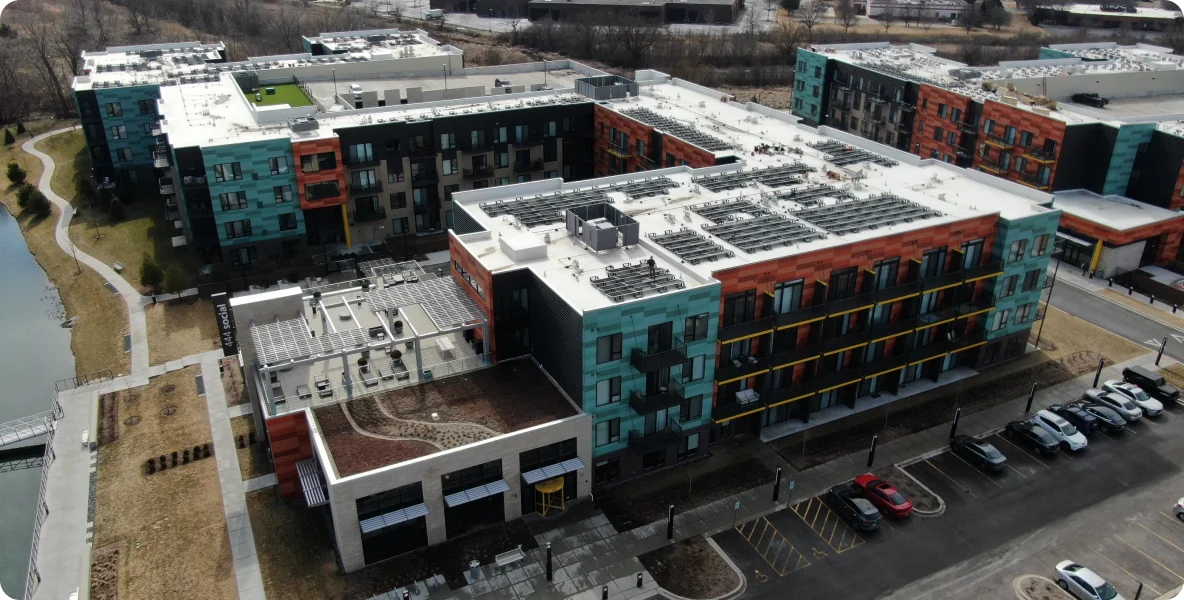
A 444-unit luxury apartment complex in the Chicago metro was paying over $120,000 annually to ComEd for common area electricity — the parking structure lighting, building mechanicals, amenity spaces, hallways, elevators, and exterior lighting that the property owner controls directly. Resident unit electricity was submetered separately and not part of the solar calculation. The property management team was evaluating cost reduction strategies that wouldn't affect resident experience or require unit-level retrofits.
Multifamily apartment properties are strong commercial solar candidates when the ownership structure generates federal tax liability — which an LLC or C-corp ownership entity typically does. This property's ownership LLC had substantial federal tax liability from real estate operations and depreciation recapture, creating an ideal foundation for the ESP zero cap-ex model.
The ESP Model for a Multifamily Property
The Energy Savings Program works for multifamily properties the same way it works for manufacturers and dealerships: the property ownership entity's federal tax liability provides the basis for zero-upfront-cost solar ownership. The ownership LLC claimed the Section 48E ITC — 30% of the 500 kW system cost — as a direct credit against federal taxes in the first year of operation. MACRS 5-year accelerated depreciation on the adjusted basis added further tax benefit in years one through five.
Unlike residential solar (which benefits individual unit owners), commercial solar for a multifamily property benefits the ownership entity directly through reduced common area operating expenses and improved net operating income (NOI). Lower NOI costs increase property valuation, making commercial solar a capital improvement that pays back in both cash flow and appraised value.
Illinois Incentives Applied
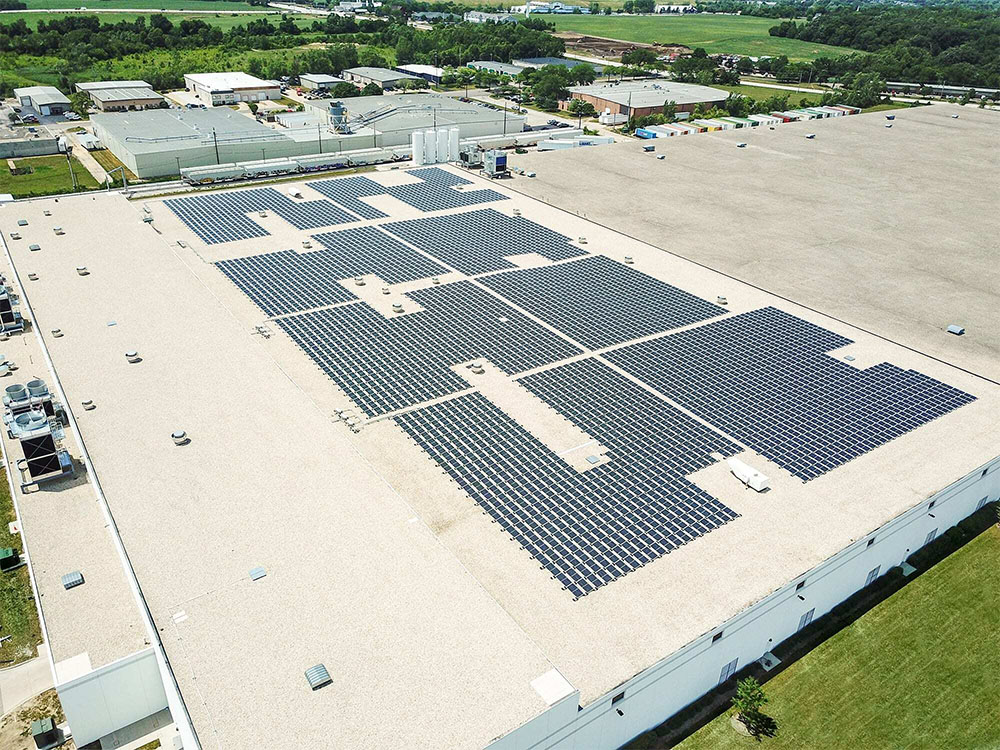
Federal ITC (30%, Section 48E): The ownership LLC applied the full 30% ITC against its federal tax liability in the placement year — a direct credit, not a deduction. For the 500 kW system at this project, the ITC generated direct tax relief in the first year, creating the financial basis for ESP financing. See the IRS Section 48E guidance for eligibility documentation.
Illinois Shines SREC Program (15-Year Contract): Solar One Illinois enrolled this project in the Illinois Shines Adjustable Block Program. For a 500 kW system producing approximately 600 MWh annually in ComEd territory, Illinois Shines income added approximately $8,500 per year in supplemental revenue over the 15-year contract — $127,500 in total SREC income on top of electricity savings.
ComEd Smart Inverter Rebate: The property's ComEd location qualified for the Smart Inverter Rebate of $250/kW, producing a $125,000 cash payment from ComEd approximately 60 days after commissioning.
MACRS 5-Year Depreciation: The accelerated depreciation schedule applied to the adjusted system basis generated substantial additional tax benefit for the ownership LLC in years one through five, improving the overall return on the real estate investment.
Illinois Property Tax Exemption: The solar installation was excluded from local property tax assessment, ensuring the improvement did not increase the property tax bill — a meaningful consideration for a large multifamily asset in Cook or collar counties.
The Outcome: Improved NOI and a Marketing Advantage
Annual common area electricity savings of $72,000 plus $8,500 in annual Illinois Shines SREC income produce $80,500 in total annual benefit. Against the ESP payment of $56,000 per year, the net first-year benefit is $24,500 — positive cash flow from the first operating month. At the ESP payoff, the property owns the 500 kW system outright and retains full savings indefinitely.
The improvement in NOI from reduced common area costs meaningfully increases the property's appraised value. At a 5% cap rate, $72,000 in annual savings represents approximately $1.44 million in additional property value — making the project financially compelling even before tax benefits are calculated. The solar installation was featured in the property's marketing materials and sustainability report, supporting premium positioning and occupancy rates.
Project Financial Summary
System Size
500 kW
Federal ITC (30%)
Direct credit applied year one
ComEd Smart Inverter Rebate
$125,000 cash
Illinois Shines SREC Income
$8,500/yr × 15 years
Upfront Capital Required
$0
Annual Electricity Savings
$72,000
Annual ESP Payment
$56,000
Net Year-One Benefit
$24,500
25-Year Projected Savings
$1.8 million+
Client name changed for privacy. Results vary. Prior results do not guarantee similar outcomes. Projections assume 1.5% annual electricity rate escalation.
For multifamily property owners evaluating commercial solar, this case study demonstrates how the ESP model, federal ITC, ComEd rebates, and Illinois Shines combine into a self-funding project. See our Illinois commercial solar overview and Illinois incentives guide for current program details, and our financing models comparison to understand how ESP compares to PPA and C-PACE alternatives for real estate entities. The federal ITC in-service deadline of December 31, 2027 applies — projects not commissioned by that date do not qualify.